Breed Info
German Shorthaired Pointer (GSP for short) is a superb hunting dog who also excels as a family companion. He hunts feathered and furred game and will even trail deer. In the evening, he plays with the kids or curls up next to you on the sofa. Not a hunter? The German Shorthair will be happy to hike or jog with you.
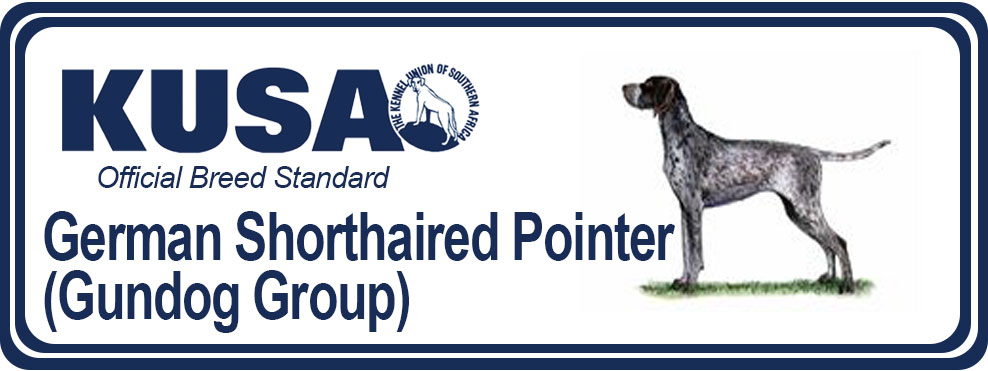
Slightly smaller than a Pointer, the GSP has an elegantly chiseled head with dark almond-shaped eyes, an intelligent, good-humored expression, and a large, dark nose. Broad, dropped ears are set high and lie flat against the head. But the most striking aspect of the GSP’s appearance is his short, dense, sleek coat of solid liver or liver and white, which can be patched, ticked or roan. The tail is usually docked, leaving about 40 percent of the original length.
GSP is enthusiastic in everything he does without being nervous or flighty. He doesn’t like being left alone, however, and can develop separation anxiety. This is a house dog, not a yard or kennel dog. He’ll love everyone in the family but may choose a special favorite. He’s highly trainable.
Not all GSPs will get any or all of these diseases, but it’s important to be aware of them if you’re considering this breed.
- Hip Dysplasia: Many factors, including genetics, environment and diet, are thought to contribute to this deformity of the hip joint. In mild cases, with proper diet and exercise the animal can lead a full and active life. In more severe cases, surgical correction may be required. Your veterinarian can x-ray your dog’s hips for evaluation. Dogs with hip dysplasia should not be bred.
- Cancer: This was one of the most reported health problems in a recent survey by the German Shorthaired Pointer Club of America. The types of cancers most often reported were mammary tumors, mast cell tumors, and lymphosarcoma.
- Lymphedema: A disorder in which valvular blockage of lymph flow or twisted lymphatic ducts cause tissues to swell from an accumulation of fluids.
- Entropion: This defect, which is usually obvious by six months of age, causes the eyelid to roll inward, irritating or injuring the eyeball. One or both eyes can be affected. If your German Shorthair has entropion, you may notice him rubbing at his eyes. The condition can be corrected surgically.
- Von Willebrand’s Disease: This is a blood disorder that can be found in both humans and dogs. It affects the clotting process due to the reduction of von Willebrand factor in the blood. A dog affected by von Willebrand’s disease will have signs such as nose bleeds, bleeding gums, prolonged bleeding from surgery, and prolonged bleeding during heat cycles or after whelping. Occasionally blood is found in the stool. This disorder is usually diagnosed in your dog between the ages of 3 and 5 and cannot be cured. However, it can be managed with treatments that include cauterizing or suturing injuries, transfusions of the von Willebrand factor before surgery, and avoiding certain medications.
- Gastric dilatation-volvulus (GDV), also called Bloat or Torsion: This is a life-threatening condition that can affect large, deep-chested dogs like GSPs, especially if they are fed one large meal a day, eat rapidly, drink large volumes of water after eating, and exercise vigorously after eating. Some think that raised feeding dishes and the type of food given might be factors in causing this to happen too. GDV occurs when the stomach is distended with gas or air and then twists (torsion). The dog is unable to belch or vomit to rid itself of the excess air in its stomach, and the normal return of blood to the heart is impeded. Blood pressure drops and the dog goes into shock. Without immediate medical attention, the dog can die. Suspect bloat if your dog has a distended abdomen, is salivating excessively, and retches without throwing up. He also may be restless, depressed, lethargic, and weak with a rapid heart rate. It’s important to get your dog to the vet as soon as possible. There is some indication that a tendency toward GDV is inherited, so it’s recommended that dogs that develop this condition should be neutered or spayed.
They are best suited to active people who have a home with a large yard surrounded by a high fence. German Shorthaired Pointers were bred to have energy and stamina to last all day in the field, so exercise is important for them. If they don’t get enough exercise, they can become nervous and destructive. Expect to exercise them an hour or more each day. Your GSP will enjoy a strenuous hike, long walk, or a good game of fetch. Given enough exercise, GSPs make excellent house dogs. Because they are so curious and intelligent, it’s a good idea to crate young GSPs when you aren’t around to supervise so they don’t get into mischief.
The distinctive coat is solid liver or a combination of liver and white. It can be ticked (small, isolated areas of black hairs on a white background), patched, or roaned (a fine mixture of colored hairs with white hairs). For instance, a liver roan GSP has a deep reddish-brown coat lightened by white hairs.
The GSP’s smooth, short coat is easy to groom and doesn’t shed excessively. Brush it weekly with a firm bristle brush and bathe only as needed. Rub your GSP’s coat with a towel or chamois to make it gleam. Be sure to check your GSP’s feet after he has been exercising or working in the field. Dry him thoroughly after hunting to prevent a chill. Examine the ears regularly for signs of infection, such as a bad odor, redness, or tenderness. If your GSP scratches frequently at his ears, he may have an infection.
They have lots of energy and make excellent playmates for active older children. They can be too rambunctious for toddlers, however. Adult German Shorthairs who aren’t familiar with children may do best in a home with older children who understand how to interact with dogs.
Always teach children how to approach and touch dogs, and always supervise any interactions between dogs and young children to prevent any biting or ear or tail pulling on the part of either party. Teach your child never to approach any dog while he’s sleeping or eating or to try to take the dog’s food away. No dog should ever be left unsupervised with a child.
German Shorthairs can get along with other dogs, although some may be aggressive toward members of the same sex. Because they’re hunting dogs, they may also be aggressive toward small furry animals such as cats or rabbits.